Triangles, Recoil, and Your Spine: Focusing on a Proper Firearm Stance
Stance is structural engineering. Build it right and recoil flows through your skeleton into the ground. Build it wrong and your lumbar spine is going to pay the bill — eventually.
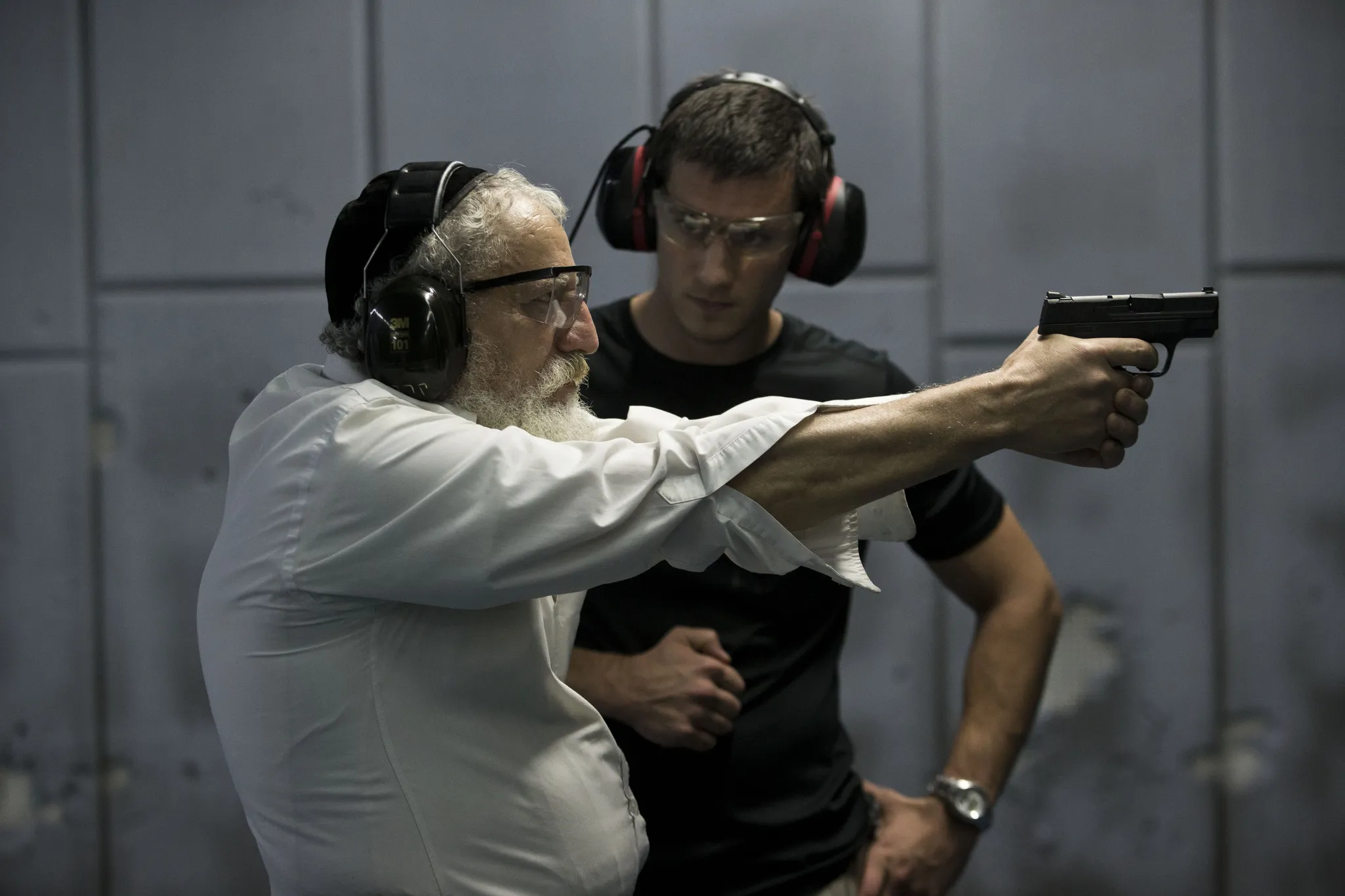
The image above came up in my feed and I figured I’d make a post about proper stance and form.
Before I begin I would like to make something clear. AI did help me write this post, but I didn’t just tell it to put something together so I can post some slop. I saw the photo above and had a strong reaction to it. Particularly because when I started my journey, I had been training rigorously and suddenly would come home, and have terrible back pain a short while after returning from the range. This post is meant to explain what I learned and hopefully save you a trip to the chiropractor.
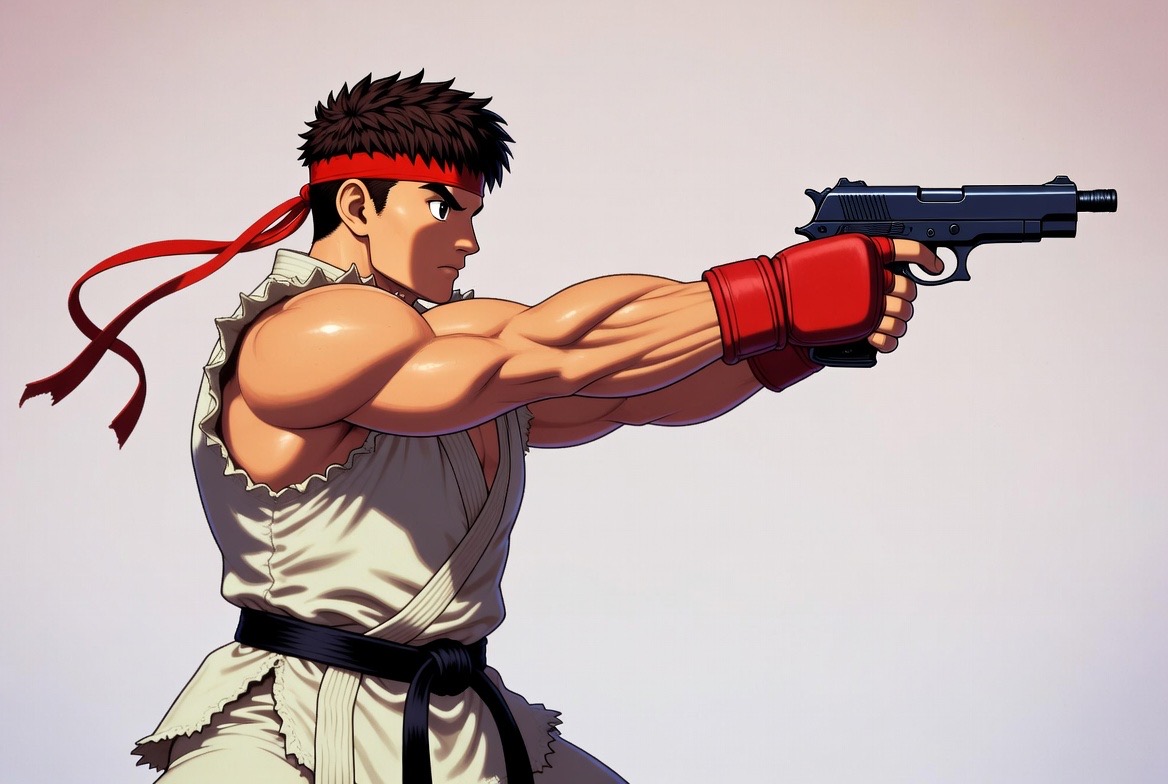
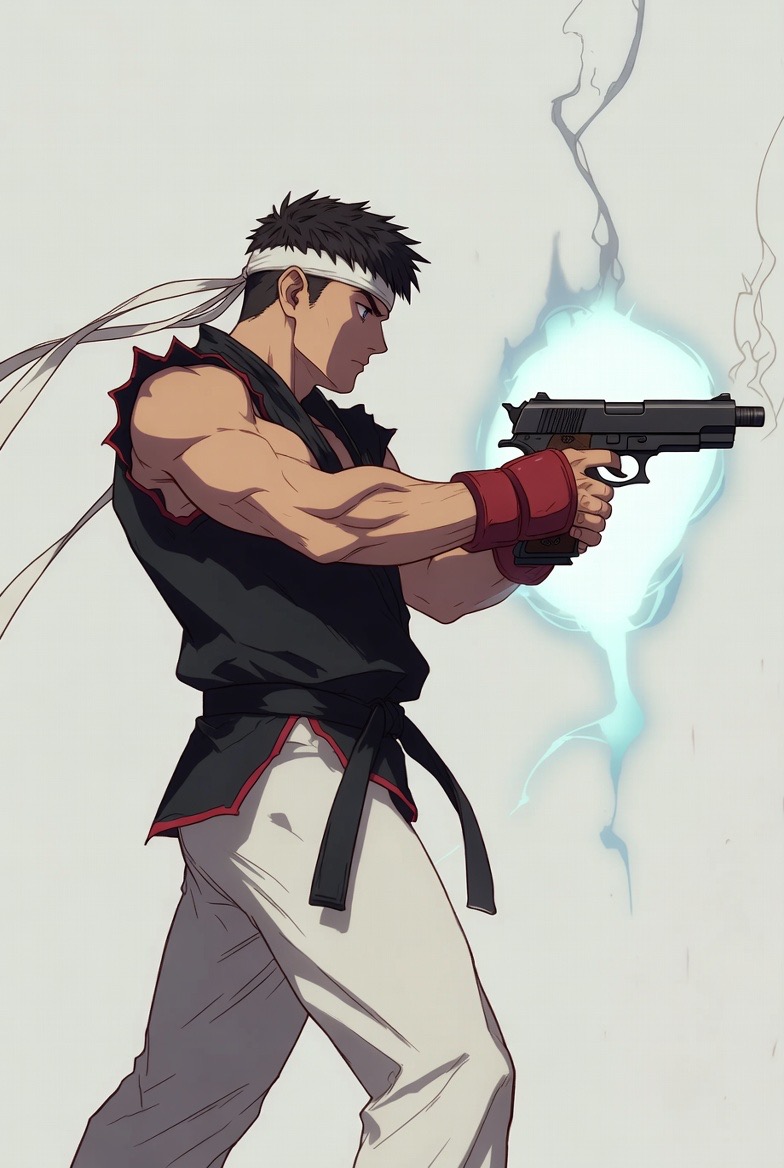
The first thing that came to mind on how to illustrate this, was the exaggerated stance of Ryu in the game Street Fighter. I remember giving up all my quarters to those arcade games and maybe I can finally make that investment worth it.
If you aren’t familiar with what I’m talking about here is an image.
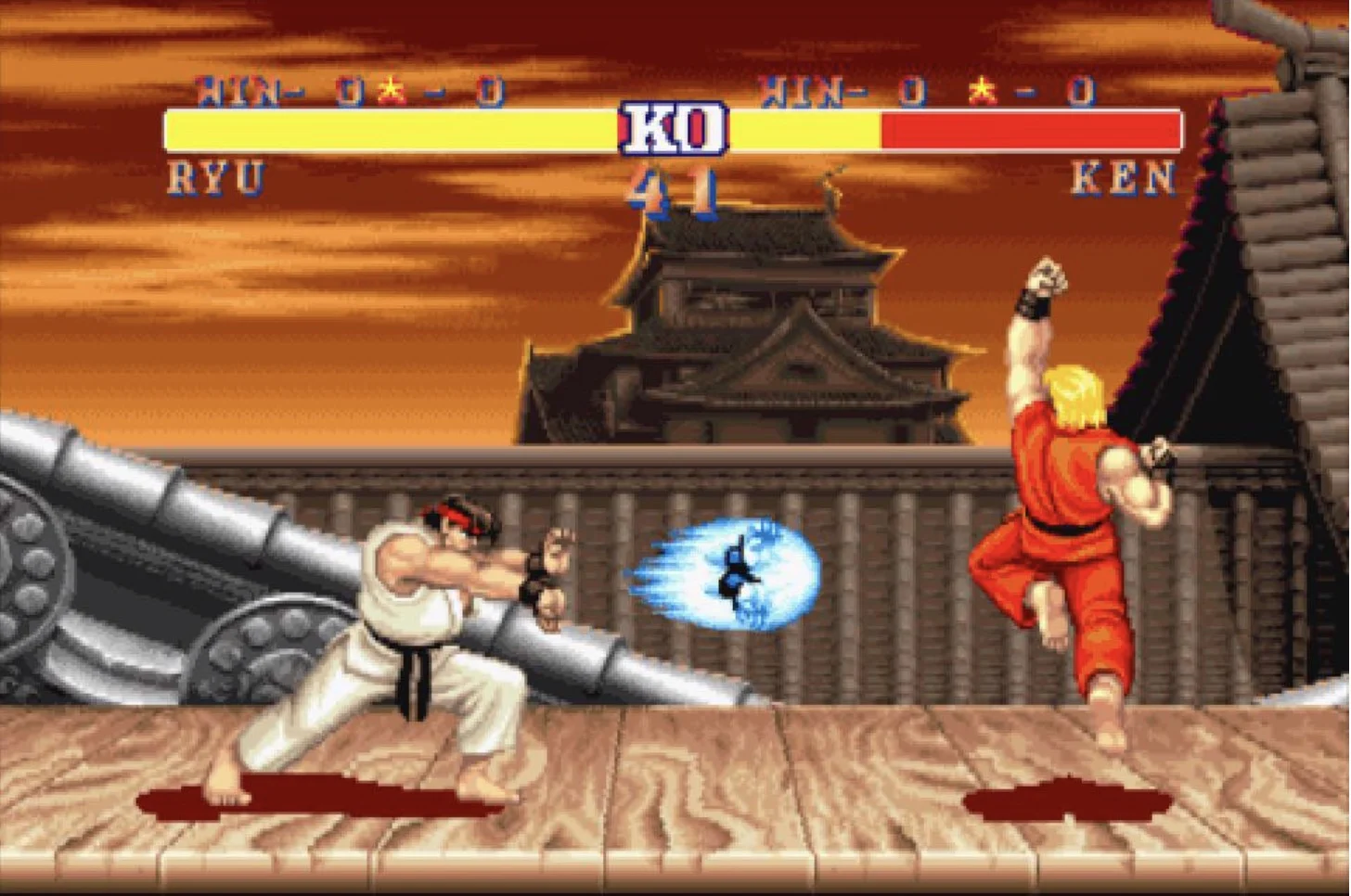
Watch Ryu after he throws a hadouken. Right foot planted behind him, left forward, hips angled, torso pitched into the strike, arms still extended in the line the energy traveled. Everything in alignment, everything braced. The pose isn’t decoration — it’s the part of the move where his body absorbs the cost of the throw without falling over. The same principle is on every range, in every defensive shooting class, every time you press a trigger.
When you fire a pistol, the gun pushes back. Not metaphorically — Recoil is Newton’s third law, equal and opposite, every time. That force leaves the muzzle traveling rearward and does not stop until it has been absorbed somewhere. The question isn’t whether you’ll absorb it. The question is which parts of you will.
If your stance is built right, the recoil travels: pistol → wrists → forearms → elbows → shoulders → upper spine → hips → legs → ground. Your skeleton is a structural truss and the load passes through it the same way a building’s load passes through its frame. You barely feel it.
If your stance is built wrong, the recoil hits a chain that’s bent or disconnected somewhere. The energy has to go somewhere, and instead of dissipating into the earth it gets absorbed by joints, ligaments, intervertebral discs, and the small muscles that aren’t meant to be load-bearing. You feel that one. Maybe not on the first shot. Definitely on the hundredth.
Triangles do the work
A pistol shooter is held up by triangles. The feet form one — a base of support whose dimensions decide how stable you are against a lateral push. The shoulders to the hands form another — an upper-body triangle that holds the gun in space. Between them, the spine and ribcage are the connector. Triangles are stable because their three sides cannot collapse without one of them breaking; that’s why every truss bridge and every strong stance uses them.
Two triangles in alignment form a stable transmission line for force. Two triangles out of alignment form a hinge, and a hinge under a hammering load is exactly what your lumbar discs were not built for.
The two dominant pistol stances are different geometries of these triangles.
Isosceles
The Isosceles Stance is what its name suggests — both arms extended equally, forming a triangle whose tip is the gun and whose base is your shoulders. Feet roughly shoulder-width and parallel (or with the strong foot slightly behind), hips and shoulders square to the target.
Isosceles is symmetrical. Its base of support is narrow front-to-back and recoil travels nearly straight back through both arms into the chest, the sternum, the upper spine. If your hips and shoulders are perfectly square and your weight is forward over the balls of your feet, the energy chain works. If you’re stood up vertical with your weight on your heels — which is what tired shooters drift toward — you become a pendulum, and every shot rocks you a little farther backward. After a few hundred rounds, your lumbar spine knows.
Isosceles got popular for a reason: it’s faster to assume from a standing rest, the gun is symmetric in both hands, and it works well with a square-to-target body that absorbs lateral threats from either direction equally. Modern competition shooters dominate from a modified or power isosceles — chest aggressively forward, hips angled, weight planted on the front of the foot. That posture solves the rocking problem but takes constant athletic engagement to maintain through a long string.
Weaver
The Weaver Stance is asymmetric. The strong-side foot is forward, the support-side foot is back and slightly outboard, like a boxer’s stance. The strong hand pushes the gun forward; the support hand pulls it back. Isometric tension lives between the two arms. Recoil travels into both arms unequally — the front arm absorbs the push, the rear arm redirects part of the force diagonally down through the support shoulder and the rear leg into the ground.
Weaver makes more triangles. The feet, staggered, form a longer and more stable base front-to-back. The arms, asymmetric, form a triangle whose apex is the gun and whose base is broader across the chest. The push/pull tension between the hands locks the upper triangle rigid. Crucially, a back foot set back gives recoil somewhere to go.
This is the part that matters for the long game.
Why a foot back saves your spine
Imagine a jackhammer. The operator doesn’t stand square to it with their feet together — they stagger their stance, lean into it, brace one leg behind. The reason is exactly what your stance is doing on every range trip: dissipating repetitive impact through a direct line into the ground rather than letting it shake the operator’s frame.
A pistol is a small, polite jackhammer. Most people don’t think of it that way because each individual shot feels mild. But you fire two hundred rounds in a session. Three hundred. A Mag Dump drill, a stage, a class. Each round delivers a sharp impulse into the structure that’s holding it. If your structure is a clean truss with the load path going through bones into the floor, that’s two hundred small impulses that leave no trace. If your structure is a stack of bent vertebrae with the load chasing soft tissue between them, that’s two hundred small your joints and spine are eating instead.
The Weaver stance, with the support foot set back, sets up a clean path. The forward foot anchors the front of the chain; the rear foot is the exit point for recoil energy. Your spine stays in line because there’s somewhere for the force to go that isn’t compressing your lumbar discs.
Illustration of good form
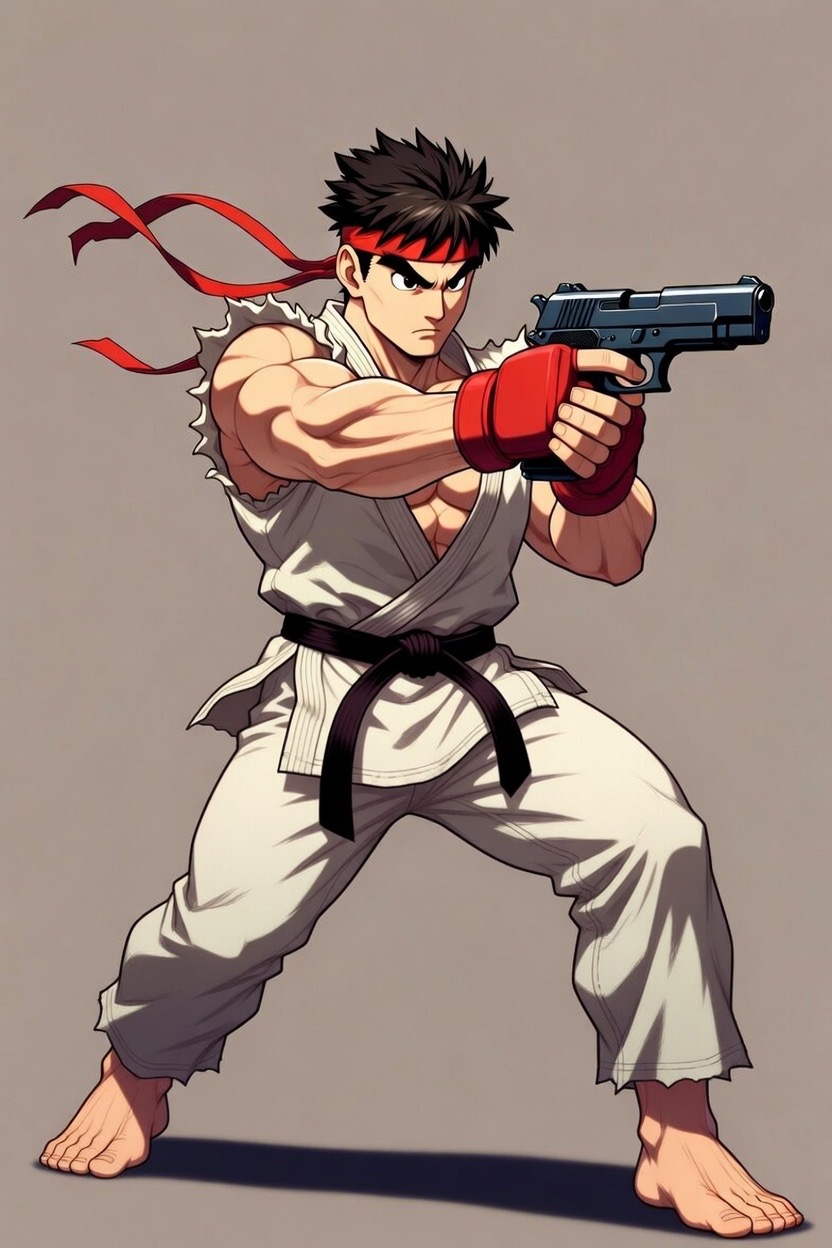
What bad stance looks like
Common bad stances at any range:
- Square stance with weight on the heels. Recoil rocks the shooter back, lumbar spine takes repeated extension loading. Tomorrow’s lower back pain.
- Right foot forward, trunk twisted to face the target. Shoulders aren’t aligned with hips, the spine has to rotate to deliver the gun forward. Now every recoil impulse travels into a twisted spine. Disc joy.
- Hunched shoulders, head pulled forward over the gun. Cervical spine takes load it wasn’t built for. Headaches and neck stiffness after long sessions.
- Locked elbows. No shock absorption at the joint; every impulse hammers straight into the shoulder socket.
You can see all of these in any range full of new shooters trying to mimic what they think looks good without anyone correcting them. The cost is invisible at first. It’s compound interest paid in joint pain, three years from now, when nobody links it back to range time.
Illustration of bad form (exaggerated)
Why this isn’t just an opinion
Both stances work for hitting targets. Both have produced champion shooters. The question I’m answering isn’t “which one shoots better” — it’s “which one will let me shoot ten thousand rounds a year for thirty years without hurting me?” On that question, my answer is Weaver, with deliberate attention to the back foot, the push-pull tension, and a slight forward lean from the hips (not the lower back). The asymmetric structure routes recoil out the back leg into the floor instead of stacking it up your spine.
If you’re shooting for sport and you’ve trained the modern aggressive isosceles to a reflex, you can keep doing what you’re doing — as long as you maintain that aggressive forward posture and never let yourself drift to a heels-back vertical stance. If you’re learning, or if your back has started complaining at the end of range days, set the back foot back. Push and pull. Lean into it from the hips. Treat the gun like a small jackhammer that needs an exit path through your skeleton, into the ground, away from your spine.
The South Park rule
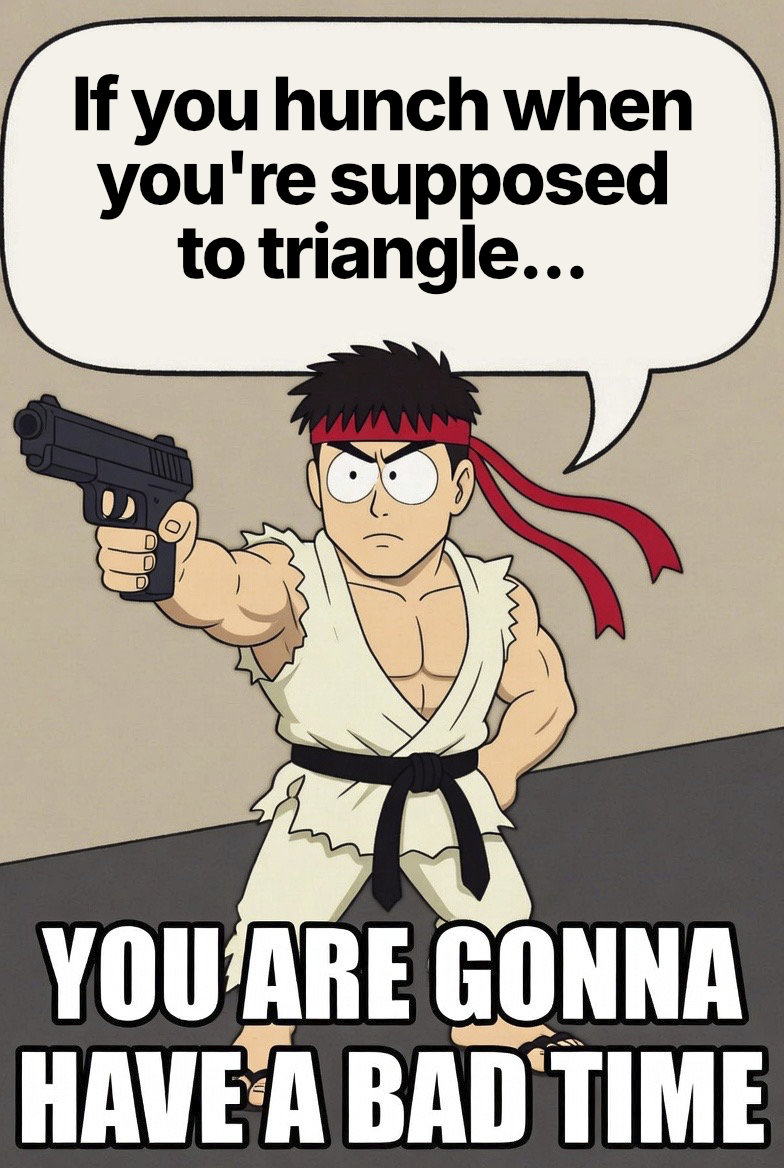
There’s a scene in an episode of South Park where a ski instructor lectures the boys, slowly and patiently: “If you french fry when you’re supposed to pizza, you’re gonna have a bad time.” Skis parallel — french fry — when you should be in a wedge — pizza — and you wipe out. This has become a meme criticizing when something is done incorrectly that may or typically will lead to a bad outcome.
Stance is the same idea. There are configurations that work and configurations that don’t, and the cost of getting it wrong isn’t a single missed shot. It’s the next decade of shooting on a back that hurts when it shouldn’t.
About the author

My Path from New Shooter to Responsible Firearm Owner, and Range Member, One Round at a Time.
Share this post
Related posts
Got a response?
Thoughts, corrections, follow-ups — drop a line.